
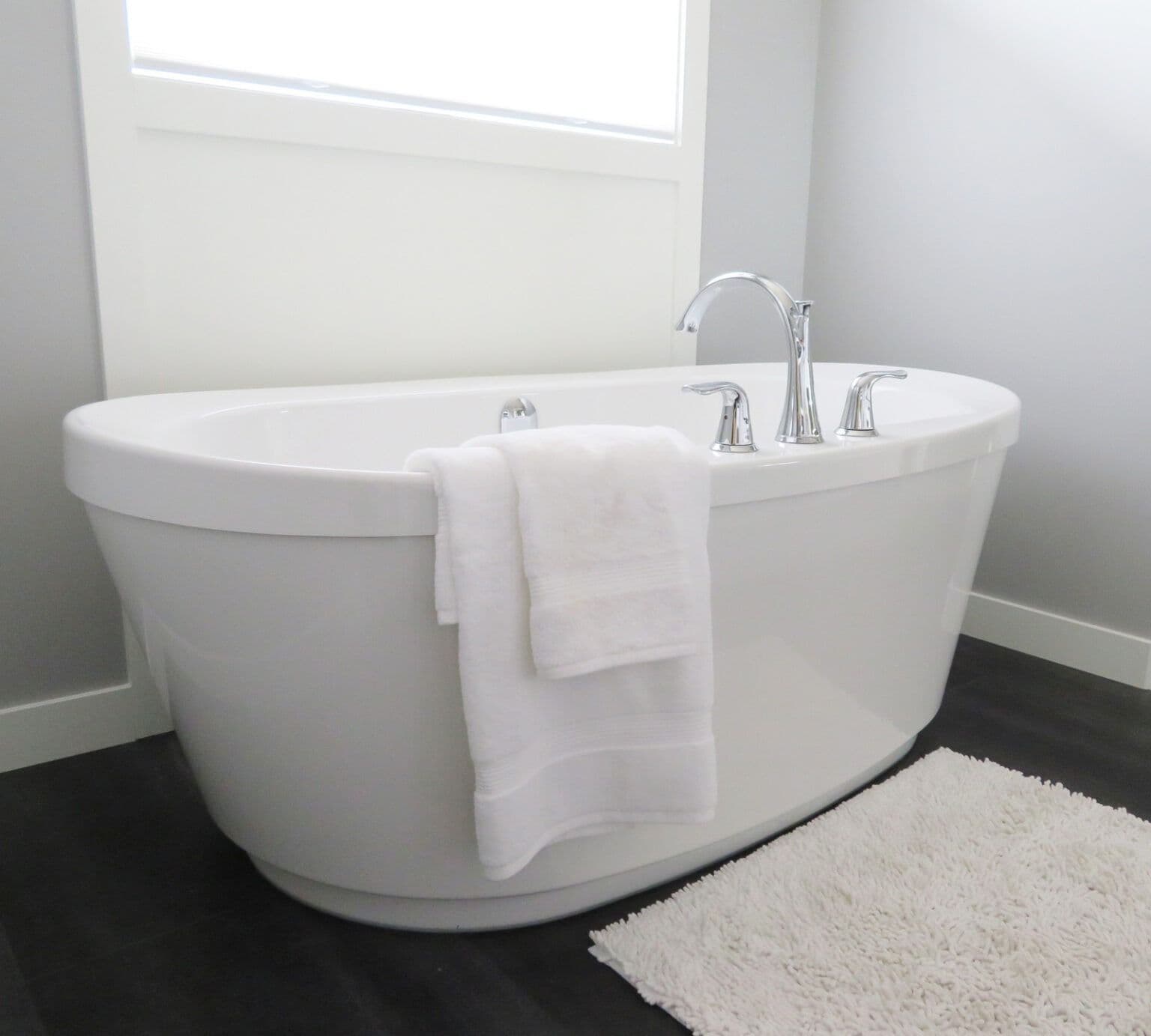
Walk-In Shower or Walk-In Tub? An Aging-in-Place Comparison
When you start planning a bathroom for aging in place, one of the biggest decisions is choosing a walk-in shower vs. walk-in tub. Both can make bathing easier than a traditional bathtub, but they support mobility, seated bathing, transfers, caregiver assistance, and daily routines in different ways.
At Top Tier Kitchens & Baths, we help homeowners throughout Missouri, Arkansas, and Kansas compare accessible bathroom options based on how the space will actually be used. Whether you are considering a walk-in shower or a walk-in tub, the right choice depends on factors such as balance, strength, bathing preferences, transfer needs, bathroom layout, and long-term plans for aging in place.
In this guide, we compare walk-in showers and walk-in tubs for aging in place, including accessibility, safety features, seating, caregiver access, maintenance, space requirements, and everyday usability. Call Top Tier Kitchens & Baths at 417-887-1100 or contact us online to schedule a consultation and get expert help choosing the bathing solution that best fits your home, mobility needs, and future comfort.
$1000 Off Your Bathroom Remodel
Or Get $500 Off Your Kitchen Remodel*
By submitting this form, I agree to Top Tier Kitchens & Baths Terms & Conditions and Privacy Policy .
Walk-In Shower vs. Walk-In Tub
Both options can make bathing more accessible by reducing the need to step over the high wall of a traditional bathtub, but they support very different routines.
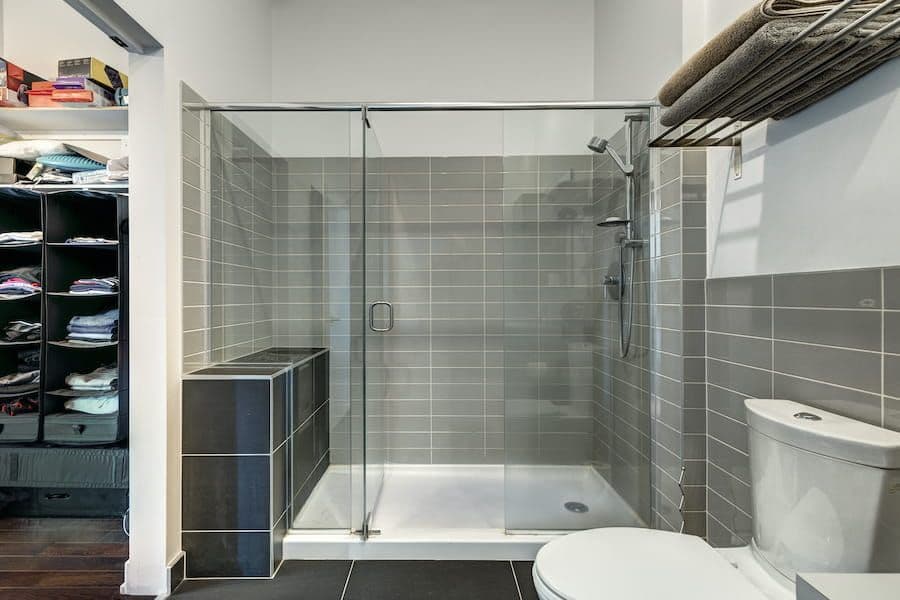
A walk-in shower creates a more open bathing space with a low or no threshold. It can be designed for standing or seated use and may include a bench, grab bars, a handheld showerhead, and easy-to-reach controls.
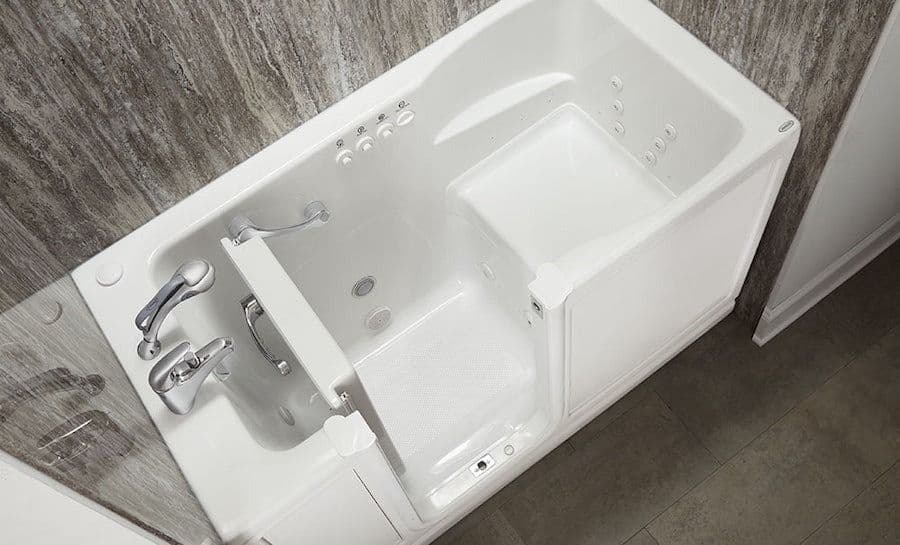
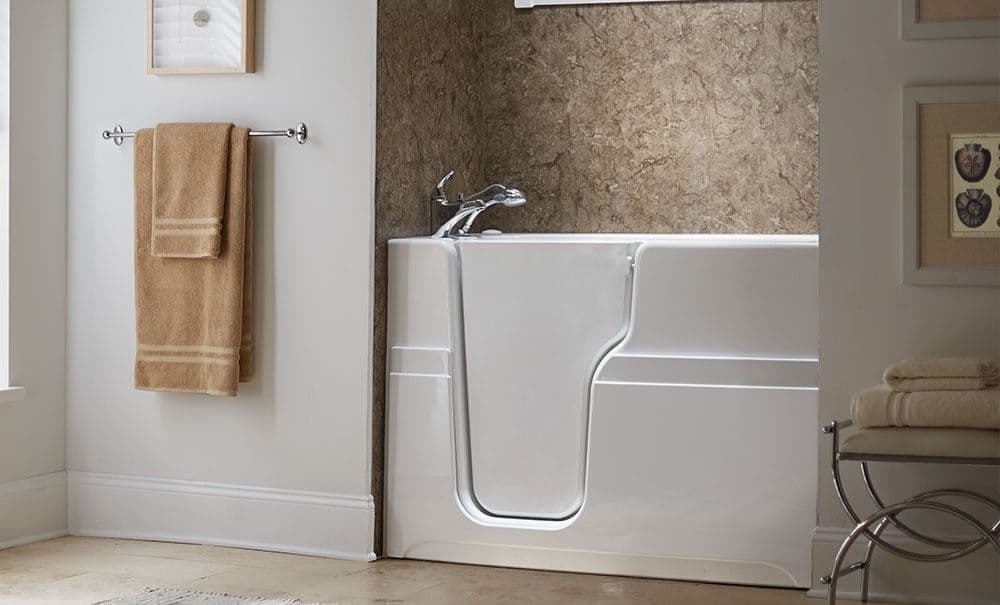
A walk-in tub offers a more enclosed, seated bathing experience. The user enters through a watertight door, sits on a built-in seat, and typically stays in place while the tub fills and drains.
So the key difference is not simply tub versus shower. It is how the person using the bathroom prefers to bathe, move, transfer, and receive support. For aging in place, the better option is the one that fits those daily needs most comfortably.
Start With Mobility, Not Appearance
Aging-in-place design works best when the bathroom is planned around everyday movement.
According to the Centers for Disease Control and Prevention, more than 14 million adults age 65 and older, or about 1 in 4, report falling each year, and falls remain the leading cause of injury among older adults.
Neither a walk-in shower nor a walk-in tub can eliminate fall risk, but both can reduce the need to climb over a conventional tub wall and make room for additional safety features.
When comparing them, consider whether the user can:
Step over a low threshold comfortably
Stand long enough to shower
Sit down and rise from a built-in seat
Turn or reposition easily
Reach faucets and controls without stretching
Use grab bars effectively
Enter and exit without losing balance
Those answers are often more useful than choosing based on appearance alone.
When a Walk-In Shower May Be the Better Fit
A walk-in shower may be the better choice if you want easier entry, more room to move, and a bathing setup that still feels familiar.
You Want to Minimize Entry Barriers
Walk-in showers can be designed with a low threshold or, when the space allows, a barrier-free entrance.
For someone who has difficulty lifting their feet, uses a walker, or simply wants fewer obstacles in the bathroom, reducing the step into the shower can make everyday use more comfortable.
Federal ADA Standards do not automatically apply to private homes, but they can provide helpful accessibility reference points. The standards address features such as shower seating, grab bars, control placement, and transfer or roll-in configurations.
You Need More Room to Move or Assist
Compared with an enclosed tub, a walk-in shower can often provide more open floor space for turning, repositioning, or receiving assistance.
That extra room may be especially useful for someone who uses a mobility aid or expects caregiver support in the future.
You Prefer Showering to Soaking
Your normal bathing habits should play a major role in the decision.
If you rarely take baths, a walk-in tub may add features you are unlikely to use. A walk-in shower keeps the familiar showering experience while allowing you to build in accessibility features such as:
Built-in or fold-down seating
Grab bars
Handheld showerheads
Slip-resistant flooring
Accessible shelving
Easy-to-operate controls
Low-threshold showers are also a viable option for homeowners who want to reduce barriers at the shower entrance without giving up the convenience of a traditional shower.
When a Walk-In Tub May Be the Better Fit
A walk-in tub provides a different benefit: supported, seated bathing with the ability to soak.
Standing for a Shower Is Difficult
A built-in seat allows the user to remain seated while bathing rather than standing for an extended period.
Walk-in showers can also include seating, but the experience is different. A walk-in tub surrounds the seated user with water, while a shower seat supports seated showering.
The better option depends on the person's strength, balance, preferences, and ability to sit down and stand back up comfortably.
You Still Enjoy Soaking
Aging-in-place remodeling does not mean giving up the type of bathing you enjoy.
If soaking is important, a walk-in tub preserves that experience while reducing the need to climb over a traditional tub wall. Depending on the model, additional comfort features may include hydrotherapy jets, heated surfaces, or handheld showerheads.
You Prefer Built-In Support
Walk-in tubs can combine a low entry, integrated seat, grab bars or handrails, and accessible controls in one compact bathing system.
For some users, having those features arranged around a fixed seated position may feel more comfortable than moving through a larger shower.
Compare Transfers, Seating, and Caregiver Access
This is one of the most important aging-in-place considerations.
Think about how the user will get into the bathing position, not just how they will enter the bathroom.
With a walk-in shower, the user may step or roll into the space and then transfer to a shower seat. A larger shower can also provide more room for a caregiver to assist.
With a walk-in tub, the user enters through the tub door and lowers onto the built-in seat. Door width, seat height, threshold height, grab-bar placement, and interior space all affect how easy that process feels.
Seating also works differently:
Walk-in shower seats may be built in, fold-down, or freestanding.
Walk-in tub seats are integrated into the tub and designed for the user to remain seated while the tub fills and drains.
If wheelchair transfers or caregiver assistance may be needed, those movements should be evaluated before choosing either option.
Factor In Fill, Drain, and Everyday Maintenance
A walk-in shower provides water immediately and lets the user leave as soon as they are finished.
A walk-in tub works differently. The user generally enters first, closes the watertight door, waits for the tub to fill, and remains seated until the water drains.
That makes fill and drain performance important, especially for someone who becomes cold easily or does not want to remain seated for long periods.
Before choosing a walk-in tub, ask about:
Expected fill time
Drain performance
Hot-water requirements
Water-heater capacity
Household water pressure
Heated seating or backrest options
Maintenance also differs.
Walk-in showers can be relatively easy to access for cleaning, although maintenance depends on the wall material, enclosure, flooring, and grout.
Walk-in tubs have more contours, a watertight door seal, and sometimes a jet system that requires periodic care. Acrylic surfaces can simplify routine cleaning, but seals, drains, and therapeutic features still need to be maintained according to manufacturer instructions.
If bending or reaching is already difficult, consider who will maintain the bathing area and how easy each option will be to clean.
Don't Overlook the Rest of the Bathroom
The tub or shower is only one part of an aging-in-place bathroom.
A broader bathroom remodel for seniors may also address:
Slip-resistant flooring
Grab-bar placement
Better lighting
Clear walking paths
Accessible storage
Comfortable toilet height and clearance
Easy-to-operate faucets
Wider doorways where needed
If several parts of the bathroom are difficult to navigate, replacing only the tub or shower may not solve the larger accessibility problem.
Which Is Better for Aging in Place?
A walk-in shower may be a strong choice if you:
Prefer showers to baths
Want minimal entry barriers
Need more open maneuvering space
Want room for caregiver assistance
Prefer to enter and exit immediately
A walk-in tub may make more sense if you:
Prefer bathing while seated
Still enjoy soaking
Want integrated support in a compact area
Value hydrotherapy or comfort features
Can comfortably wait for the tub to fill and drain
Do not make the decision based on age alone. Balance, strength, mobility, range of motion, bathing habits, bathroom size, and future assistance needs are more useful considerations.
Why Homeowners Choose Top Tier Kitchens & Baths
Aging-in-place remodeling requires more than choosing an accessible product. The bathroom has to work for the person using it, the existing layout, and the way those needs may change over time.
At Top Tier Kitchens & Baths, we help homeowners throughout Missouri, Arkansas, and Kansas plan bathroom upgrades with those factors in mind. Our locally owned team combines experienced guidance with quality products, skilled installation, and a straightforward remodeling process.
Homeowners choose Top Tier for:
Multiple accessible bathing options, including walk-in showers, walk-in tubs, and low-threshold showers
Jacuzzi® bath products designed to combine accessibility, comfort, and durability
Experienced recommendations based on mobility, bathroom layout, and long-term goals
Professional installation that accounts for plumbing, fit, accessibility, and everyday usability
Warranty-backed products and workmanship for added confidence in the investment
Whether the right solution is a more open shower or a seated walk-in tub, the goal is the same: create a bathroom that is easier to use now and better prepared for the future.
Choose the Right Bathing Solution for the Years Ahead
The right aging-in-place bathroom can help you stay comfortable, confident, and independent in your home for longer. That starts with choosing a bathing solution that makes everyday routines easier instead of adding new obstacles.
For some homeowners, that means an open walk-in shower with minimal barriers and more room to move. For others, a walk-in tub offers the seated support and soaking experience they prefer. The best choice is the one that fits your mobility, bathing habits, and long-term needs.
Top Tier Kitchens & Baths can help you compare walk-in showers, walk-in tubs, low-threshold showers, and other accessible bathroom options based on your space, routine, and goals.
Call 417-887-1100 or contact us online today to schedule your consultation and get expert guidance on creating a bathroom that supports greater comfort, accessibility, and independence for years to come.
FAQ: Walk-In Shower or Walk-In Tub
Q: Is a walk-in shower or walk-in tub better for aging in place?
It depends on the user’s mobility, bathing preferences, and bathroom layout. A walk-in shower may be better for someone who wants fewer entry barriers and more open space, while a walk-in tub may be a better fit for someone who prefers seated bathing and soaking.
Q: Which is safer, a walk-in shower or a walk-in tub?
Neither option is automatically safer for everyone. Safety depends on details such as threshold height, grab-bar placement, seating, slip-resistant surfaces, control placement, and how easily the user can enter and exit the bathing area.
Q: Is a walk-in shower better for someone with limited mobility?
It can be. Walk-in showers can offer low or barrier-free entry and more room to maneuver, which may help someone who uses a walker, needs caregiver assistance, or wants to minimize stepping over obstacles.
Q: Is a walk-in tub good for someone who cannot stand for long periods?
Yes, a walk-in tub can be a practical option for someone who prefers to remain seated while bathing. Built-in seating allows the user to sit throughout most of the bathing process.
Q: Can you sit down in a walk-in shower?
Yes. Walk-in showers can include built-in, fold-down, or freestanding seating. A handheld showerhead and well-placed grab bars can make seated showering more comfortable and convenient.
Q: Do walk-in tubs take a long time to fill and drain?
Fill and drain times vary by model, household water pressure, plumbing, and water-heater capacity. Because the user typically stays inside while the tub fills and drains, these factors are worth comparing before choosing a model.
Q: Which option is better for caregiver assistance?
A larger walk-in shower may provide more open space for a caregiver to assist with bathing or transfers. However, the best option depends on the user’s specific mobility and transfer needs.
Q: Can a walk-in shower or tub fit in the space of my existing bathtub?
Often, yes. Many walk-in showers and walk-in tubs can be installed within the general footprint of a standard bathtub, but plumbing, wall, flooring, or accessibility modifications may still be required.
Q: How do I choose between a walk-in shower and walk-in tub?
Start with how the person using the bathroom prefers to bathe, how easily they can stand, sit, transfer, and step over thresholds, and whether caregiver assistance may be needed. A professional assessment can help determine which option best fits both the bathroom and the user’s long-term needs.
Related Topics
Get Started Today!
Submit a quote request on our website or give us a call at (417) 580-9717 to schedule a free, in-home consultation with one of our designers. We look forward to serving you!
Reviews
We recently had a complete kitchen remodel, added a full bathroom, and remodeled a half bath into a pantry. Top Tier was fantastic to work with and the results were beautiful.
We Had A walk in shower installed where we once had a tub Top tier had the whole project completed on time (2days) The folks that did the work did a excellent job I recommend Top Tier 100% We have some work in the future needing done and certainly will be using Top Tier again.
Top Tier Remodeled my bathroom. They were very professional, neat, and cooperative. We are very pleased with the quality of their work and the price. We definitely recommend Top Tier if you need Kitchen or Bathroom work.
We also had them remove and install a new back splash. Love what they did! They made sure the job was done, and done right. A great group of people to work with, very professional. We are so happy with the way the kitchen turned out! Highly recommended.
Joseph was a good salesman. He helped us pick out the colors that matched. The workers were courteous. They were pleasant and did good work.
Our Awards







Contact Us

Monday – Friday 9:00am – 5:00pm
